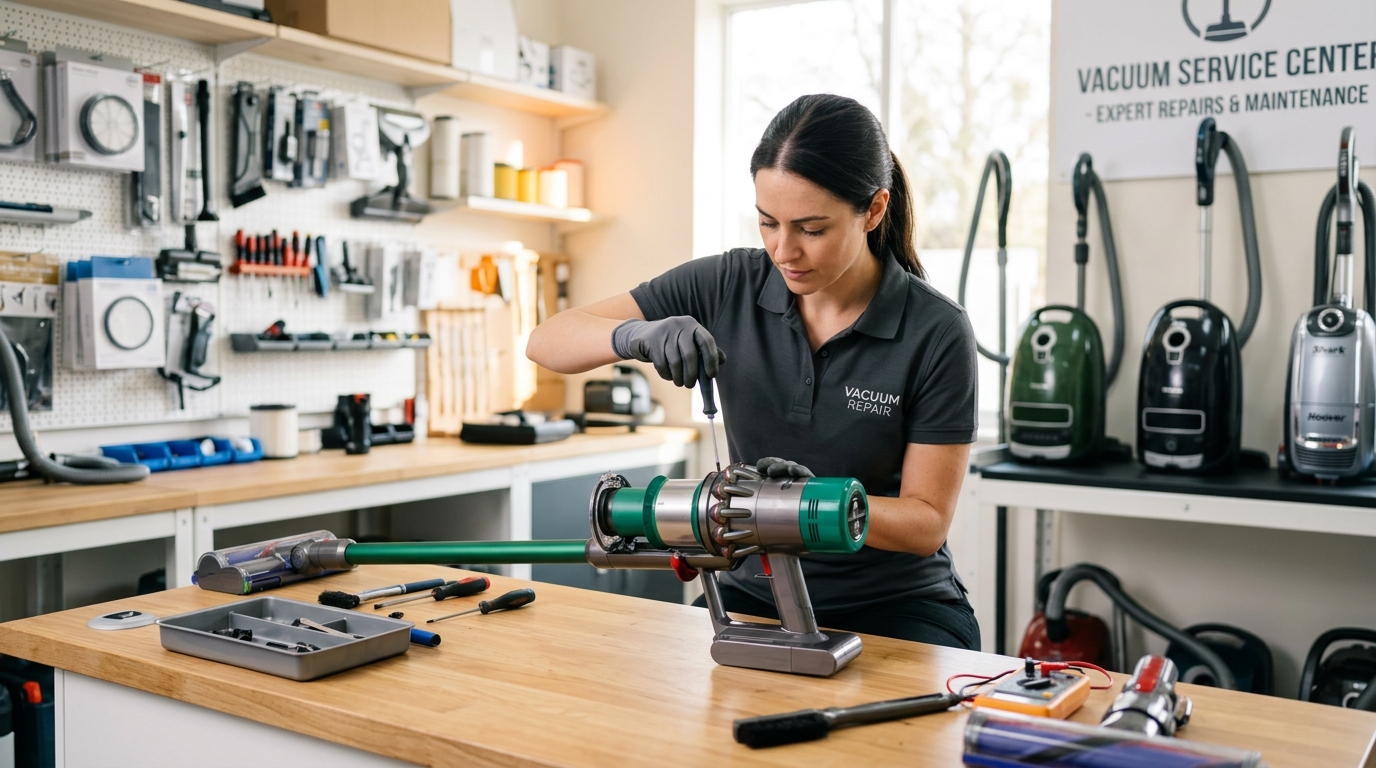
Did you know that the average household produces about 40 pounds of dust each year? A functioning vacuum cleaner is crucial for managing this, ensuring your living spaces remain clean and healthy. However, like any essential home appliance, vacuum cleaners can develop issues that hinder their performance over time. When you notice a drop in suction, unusual noises, or a decline in overall effectiveness, it might be time for expert intervention. For reliable diagnostics and efficient solutions, consider professional Vacuum Cleaner service near me to restore your appliance's peak performance.
Ensuring Your Vacuum Cleaner Stays Efficient and Healthy
Regular service is not just about fixing a broken vacuum; it's about preventative care that safeguards your appliance and your home's cleanliness. Over time, internal components accumulate dirt, dust, and debris, which can strain the motor and reduce suction power. This buildup can lead to inefficient cleaning, forcing your vacuum to work harder than necessary and potentially shortening its lifespan.
Routine maintenance helps identify minor issues before they escalate into major, costly repairs. A professional technician can thoroughly clean filters, inspect belts, check motor functionality, and ensure all moving parts are lubricated and operating smoothly. This proactive approach not only maintains the vacuum's efficiency but also contributes to better indoor air quality by ensuring the machine effectively captures allergens and dust.
Neglecting regular service can result in decreased cleaning power, increased energy consumption, and premature failure of expensive components. Investing in routine service ensures your vacuum cleaner remains a reliable tool, keeping your home environment fresh and free from everyday dust and debris for longer.
Your vacuum cleaner often gives clear signs when it's struggling and needs professional attention. One of the most common indicators is a noticeable loss of suction power. If your vacuum isn't picking up dirt and debris as effectively as it used to, or if you find yourself having to go over the same spot multiple times, it’s a strong signal that something is amiss.
Unusual noises are another tell-tale sign. Grinding, squealing, rattling, or high-pitched whining sounds that differ from the vacuum’s normal operating hum often point to problems with the motor, brush roll bearings, or a foreign object lodged within the mechanism. Similarly, if you detect a burning smell, it could indicate an overheating motor, a slipping belt, or an electrical issue that requires immediate attention.
Other warning signs include the brush roll failing to spin, even when the vacuum is on, or the machine cutting out intermittently during use. Visible damage such as frayed power cords, cracks in the housing, or a loose hose also necessitates a professional check. Addressing these symptoms promptly can prevent further damage and ensure your vacuum cleaner operates safely and efficiently.
Before you reach out for professional help, there are several simple checks you can perform that might resolve the issue yourself and save you a service call. Many common vacuum cleaner problems stem from easily identifiable causes. Start by checking the obvious: is the vacuum plugged into a working power outlet? Sometimes, a tripped circuit breaker or a loose connection is the culprit behind a seemingly dead vacuum.
Next, inspect the dust bag or canister. A full bag or canister severely restricts airflow, leading to a significant loss of suction. Empty or replace it regularly. Similarly, dirty or clogged filters can drastically impair performance; clean or replace them according to your manufacturer's instructions. A blocked hose is another frequent cause of poor suction. Disconnect the hose and check for any lodged debris using a broom handle or similar tool.
Finally, examine the brush roll. Hair, threads, or carpet fibers often get wrapped around it, preventing it from spinning effectively. Use scissors to carefully cut away any accumulated debris. Addressing these basic points can often restore your vacuum’s functionality without the need for a technician.
Navigating Professional Vacuum Cleaner Service in Dhanbad
When you book a professional vacuum cleaner service, you should expect a thorough examination and cleaning process designed to restore your appliance to optimal working condition. The service typically begins with a detailed diagnostic check to pinpoint any underlying issues, even those not immediately apparent. Technicians will test suction power, motor function, and electrical safety.
Following diagnosis, the service usually includes a deep cleaning of all internal components. This involves disassembling parts to remove accumulated dust, hair, and debris from the motor housing, fan, and air pathways. Filters are inspected, cleaned, or replaced if necessary, ensuring maximum filtration efficiency. Belts are checked for wear and tear and replaced if they show signs of stretching or cracking, which can impact brush roll performance.
Further checks involve lubricating moving parts, inspecting the brush roll for damage, and ensuring all electrical connections are secure and safe. Once all components are serviced and reassembled, the vacuum cleaner undergoes a final operational test to confirm it's working efficiently and safely. This comprehensive service ensures every aspect of your vacuum cleaner is functioning as it should.
The cost of vacuum cleaner repair in Dhanbad can vary significantly depending on the nature of the issue, the brand and model of your vacuum, and whether replacement parts are needed. Minor repairs, such as unclogging hoses, replacing a worn-out belt, or cleaning/replacing filters, typically fall into a lower price bracket. These services often range from ₹300 to ₹800, primarily covering labor and the cost of inexpensive parts.
For more complex issues, like motor malfunctions, circuit board replacements, or extensive brush roll assembly repairs, the costs will be higher. These repairs can range anywhere from ₹1000 to ₹3500 or more, especially if specialized parts for premium brands are required. A professional service provider will usually perform a diagnostic check first to accurately identify the problem and provide a detailed estimate before proceeding with any work. It is always advisable to get a clear breakdown of parts and labor charges.
Factors like the age of the vacuum, the availability of specific parts, and the technician's experience also play a role in the final price. While it might be tempting to opt for the cheapest service, prioritize technicians who offer transparent pricing and use genuine or high-quality compatible parts to ensure a lasting repair.
The time it takes to service or repair a vacuum cleaner depends heavily on the complexity of the problem. For minor issues, such as a simple clog removal, belt replacement, or filter cleaning, a skilled technician can often complete the job within 30 to 60 minutes. These quick fixes are generally performed on-site or during a brief visit to a service center.
More involved repairs, like addressing motor issues, replacing major electronic components, or dealing with extensive internal damage, will naturally take longer. A thorough diagnosis alone might take 30 minutes, followed by the repair itself. If specific parts need to be ordered, the repair time will extend, potentially spanning several days, depending on part availability. In such cases, the service center will usually provide an estimated timeline for part procurement and completion.
Many repair services aim for a quick turnaround to minimize inconvenience. It’s always best to ask for an estimated completion time when you drop off your vacuum or when scheduling an on-site visit. This ensures you have a clear expectation of when your appliance will be ready for use again.
Practical Advice for Extending Your Vacuum Cleaner's Life
After investing in professional vacuum cleaner service, maintaining good habits can significantly extend your appliance's life and efficiency. The most crucial step is to regularly empty the dust bag or canister. Do not wait until it's completely full; a partially full container already impacts suction power. For bagless models, clean the canister with a damp cloth periodically to prevent dust buildup on its surfaces.
Filters are your vacuum's defense against airborne particles, and they need attention. Wash washable filters regularly as per the manufacturer's instructions, and replace disposable ones when they become discolored or show signs of wear. A clogged filter makes the motor work harder, reducing its lifespan. Frequently check the brush roll for tangled hair, threads, or debris and remove them. This prevents strain on the motor and ensures proper agitation on carpets.
Additionally, inspect the hose and attachments for blockages, especially after vacuuming larger debris. Always use your vacuum cleaner for its intended purpose – avoid vacuuming liquids, large sharp objects, or construction dust unless your model is specifically designed for such tasks. Proper storage in a clean, dry place also protects your vacuum from accidental damage and dust accumulation when not in use.