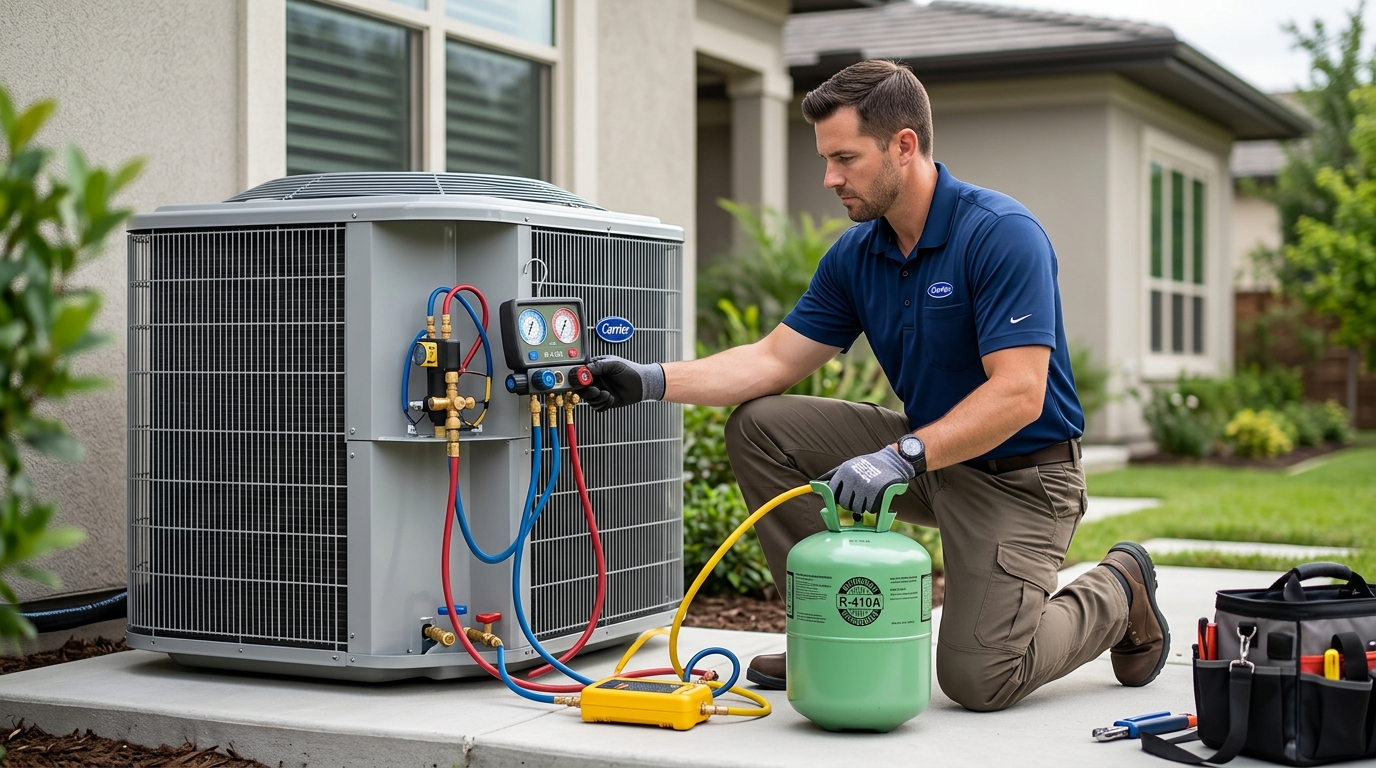
Many AC owners make a common mistake: waiting until their unit completely stops cooling before addressing gas issues. This often leads to discomfort and potentially higher repair costs than if the problem had been caught early. Understanding the signs that your AC might need a gas top-up and what factors influence ac installation or gas filling charges can save you time, money, and hassle. Don't let a minor leak turn into a major breakdown – proactive attention to your AC's refrigerant levels is key to maintaining comfort and efficiency.
Recognizing the Signs Your AC Needs a Gas Top-Up
Before you even think about calling a technician, it's helpful to know what symptoms point towards a low refrigerant level. Being aware of these signs can help you identify the problem early and prevent more significant damage to your unit.
- Reduced Cooling Efficiency: This is the most obvious sign. If your AC is running but the air coming out isn't as cold as it used to be, or if it feels warm, it's a strong indicator of low gas. The unit struggles to absorb heat from your room effectively.
- Increased Electricity Bills: When your AC unit is low on refrigerant, it has to work much harder and run longer to try and reach the set temperature. This continuous operation consumes more electricity, leading to a noticeable hike in your utility bills.
- Icing on Coils or Pipes: A tell-tale sign of low refrigerant is the formation of ice on the copper pipes connected to your outdoor unit, or on the evaporator coil inside the indoor unit. This happens because the low pressure causes the refrigerant to get too cold, freezing the moisture around it.
- Hissing or Bubbling Sounds: If you hear unusual hissing noises near your outdoor unit or bubbling sounds from the indoor unit, it could indicate a refrigerant leak. Hissing often points to gas escaping through a small crack, while bubbling might suggest air has entered the system.
- AC Running Constantly: An AC unit with low gas will struggle to reach the thermostat's set temperature, causing it to run continuously without cycling off. This not only wastes energy but also puts undue stress on the compressor.
Understanding AC Gas Filling Costs and What's Included
When your AC needs a gas top-up or a full refill, knowing what to expect financially and service-wise can help you make informed decisions. The charges typically depend on several factors, including the type of refrigerant, the amount needed, the AC unit type, and the service provider's location.
Typical Price Ranges:
- Refrigerant Type: Different refrigerants have different costs. R22 (older ACs) is often less expensive than newer, eco-friendly options like R32 or R410A.
- R22 (older units): A top-up might range from ₹1,500 to ₹2,500, while a full refill could be ₹2,500 to ₹4,000. Note: R22 is being phased out due to environmental concerns.
- R32 / R410A (modern units): A top-up generally costs between ₹2,000 and ₹3,500. A complete refill, especially after a leak repair, can range from ₹3,500 to ₹6,000 or more, depending on the AC tonnage and the severity of the issue.
- AC Type: Window ACs might have slightly lower charges than split ACs due to simpler access. Inverter ACs, while more efficient, use specific refrigerants that might sometimes influence cost.
- Location and Technician: Prices can vary significantly between metropolitan areas and smaller towns, and based on the experience and reputation of the service technician or company.
Job Duration: A simple gas top-up for a minor loss typically takes about 1 to 2 hours. However, if a leak needs to be detected and repaired before refilling, the job can extend to 3-4 hours or even longer, depending on the complexity of finding and fixing the leak. A full system vacuum and refill also adds to the duration.
What is Typically Included in the Service:
- Initial Diagnosis: The technician will first inspect your AC unit to confirm that low refrigerant is indeed the problem and not something else like a dirty filter or capacitor issue.
- Leak Detection: This is a crucial step. A responsible technician will not simply refill gas if there's a leak. They should use methods like soap water, nitrogen pressure testing, or electronic leak detectors to pinpoint the source of the leak.
- Leak Repair (often separate charge): While leak detection is usually part of the service, the actual repair of the leak (e.g., soldering a pipe, replacing a valve) might incur an additional charge, which should be quoted upfront.
- System Vacuuming: Before a full refill, the system should be thoroughly vacuumed to remove any moisture and non-condensable gases, which can degrade the refrigerant's performance and damage the compressor. This step is essential for system longevity.
- Refrigerant Filling: The technician will add the correct type and amount of refrigerant according to your AC's specifications.
- Post-Service Performance Check: After refilling, the technician should run the AC to check its pressure levels, temperature output, and overall cooling performance to ensure the problem is resolved.
- Service Warranty: Reputable service providers often offer a short-term warranty on their gas filling service, giving you peace of mind.
Essential Checks Before Booking Your AC Gas Service
To ensure you get reliable service and avoid unnecessary costs, there are several important steps you should take before booking an AC gas filling.
- Verify the Actual Problem: Before assuming it's a gas issue, perform basic checks yourself. Ensure air filters are clean, the outdoor unit is free from obstructions, and the fan is operating. Sometimes, poor cooling can be due to a clogged coil or a faulty capacitor, not low gas.
- Choose a Reputable Service Provider: Look for technicians or companies with good reviews, certifications, and a proven track record. Ask for recommendations from friends or family. A skilled professional can accurately diagnose and fix the issue.
- Request a Detailed Quote: Always ask for a written or clearly communicated quote that breaks down the costs. This should include charges for diagnosis, leak detection, gas filling (specifying refrigerant type and quantity if possible), and any potential additional repairs.
- Insist on Leak Detection and Repair: Never allow a technician to simply "top up" the gas without first checking for and addressing any leaks. If there's a leak, the new gas will eventually escape, making the refill a temporary and wasteful solution. A proper repair is paramount.
- Confirm Refrigerant Type: Ensure the technician uses the specific type of refrigerant recommended for your AC model (e.g., R22, R32, R410A). Using the wrong type can severely damage your compressor and void your warranty.
- Inquire About Warranty: Ask if the service comes with a warranty on the gas refilling or leak repair. This offers protection if the problem recurs shortly after the service.
By being informed and proactive, you can avoid common pitfalls and ensure your AC unit operates efficiently and reliably for years to come. Don't let uncertainty about AC gas filling charges leave you in the heat; empower yourself with knowledge.